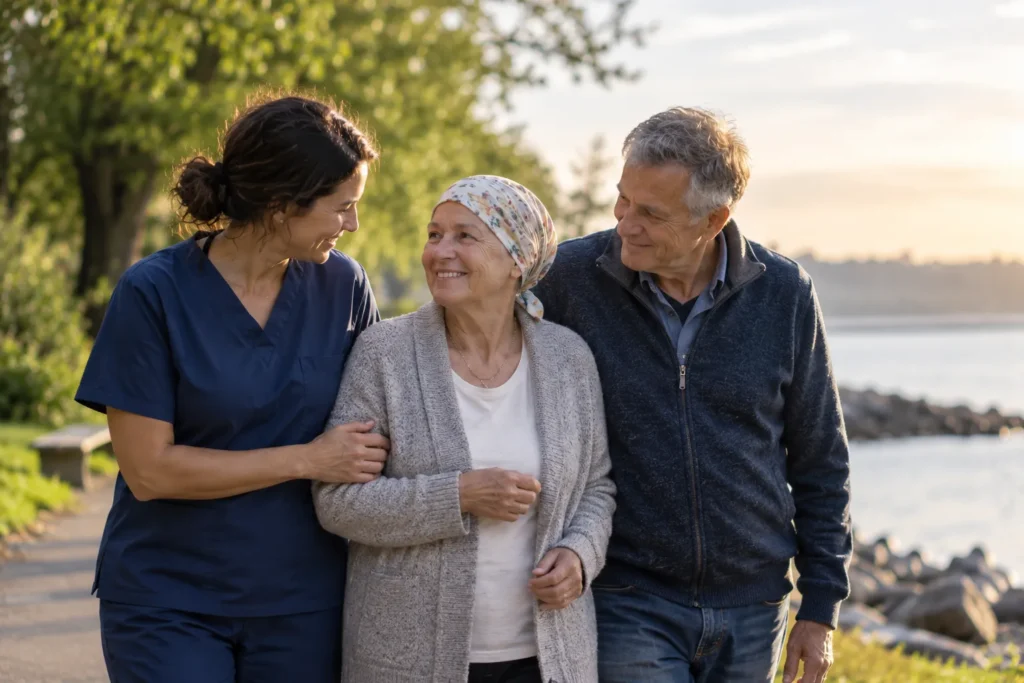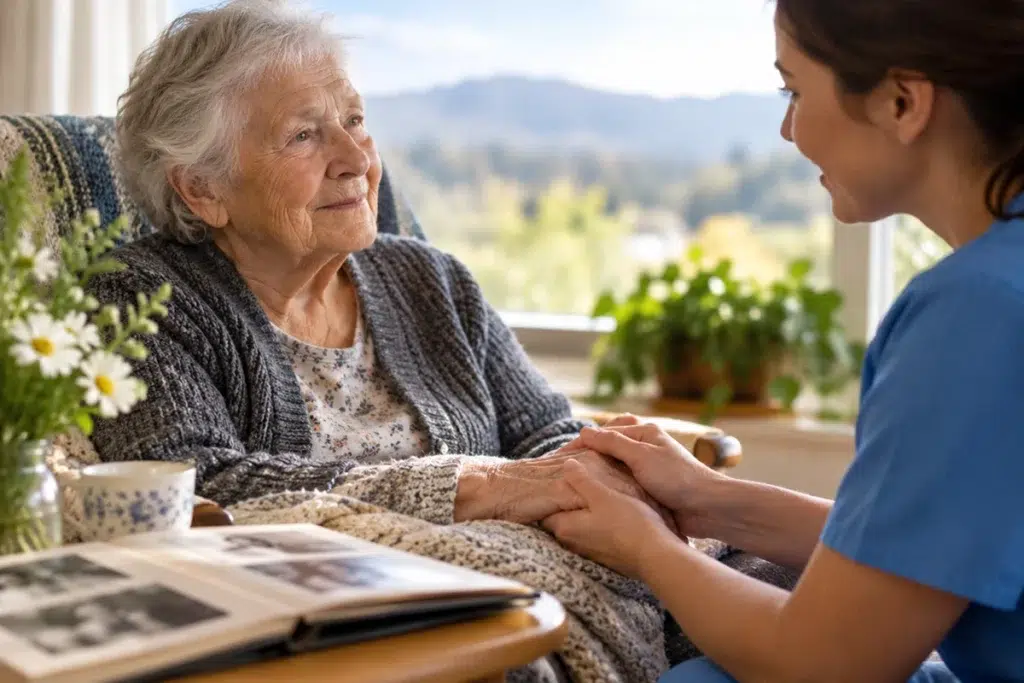

When we talk about caregivers in palliative care, the conversation usually turns to families’ and people’s circles. But there are other groups at the bedside or in the community, often for longer than anyone realizes: the personal support workers (PSWs), care aides, nurses, physicians, social workers, spiritual care providers, volunteers, community members and others who give care. They accompany people through their journey of wellness, illness, last months, the last days and the last breath, often as they go to the next visit or the next shift.
Their presence asks for closeness, the grief is real, and too often it remains unnamed. For anyone designing palliative care education or looking for resources for palliative care teams, acknowledgement is a good place to begin.
Before: attachment grows long before the death
Formal caregivers can often meet people only at the end, but more often they have been caring for these individuals long before the recognition that death is a possibility. A PSW in home care or long-term care may care for the same person for months or maybe years. A nurse on a palliative unit or a social worker in long-term care comes to know the person, their family and their routines. Attachment grows, and so does anticipatory grief, the grief that builds alongside the many losses of a serious illness.
The Canadian Grief Alliance’s Next Steps Action Plan (2025)1 notes that this grief is felt by the person who is ill, their caregivers, and their family, friends and communities, that it is too often overlooked and unsupported. Formal and informal caregivers are rarely named in that list, yet anyone who has watched a client lose strength week by week knows they are part of it.
What helps at this stage is simple. Name it on the team. Saying, “It makes sense that this one is hard,” lets a colleague treat their sadness as part of caring well rather than a sign they are losing professional footing.
During: caring for others while carrying your own grief
In the thick of the work, the emotional load is double. Formal and informal caregivers support a dying person and a family in distress while managing their own reactions. The Canadian Grief Alliance (CGA) describes grief as showing up not only as sadness but also as anger, irritation, anxiety, guilt or relief, and those feelings can shift suddenly1. A caregiver who feels relief when a long decline ends, and then guilt about feeling it, is having a normal grief response.
The report is frank about the preparation gap. Many professionals who meet grief in their work, including PSWs, physicians, nurses, social workers and spiritual care providers, receive little or no training about it. Healthcare professionals often say they lack the confidence, skills and time to offer compassionate support. That matters for patients and families too: the CGA cites research showing that ineffective or counterproductive responses can have long-term negative effects on a person’s grief2.
The report also notes that people who work around loss, including grief specialists, emergency responders, funeral professionals and volunteers, can often experience compassion fatigue, empathic strain or burnout. Stigma and low grief literacy keep many from reaching out, they are rarely offered a debrief after a death, and they may have no time in the workday to consider what a death has meant to them. Healthcare providers, the CGA adds, are experiencing high rates of burnout and many are leaving their professions.
After: the shift ends, the grief doesn’t
The CGA describes disenfranchised grief as grief that society does not recognize or that lacks rituals to help people through it, leaving people to grieve in isolation. A paid caregiver whose client has died is not family, may not be invited to the funeral, and may move straight on to the next visit. Grief of that kind can easily go unspoken and unrecognized.
The CGA’s national survey of 3,874 people offers a useful signal, even though it was not limited to professionals. Around 90% said it would be helpful to be asked about their grief. Friends and colleagues were rated helpful by 78.8% of respondents and peer support groups by 76.2%, while employee assistance programs were rated helpful by 48.4%. The report also cautions that grief and mental health are often conflated, including by employee assistance programs, and that approaches designed for depression and anxiety may not suit people who are grieving.
In practice, colleagues who understand the work may be the most powerful support a team has. One survey participant put it plainly: “Acknowledge grief even if you are uncomfortable.”
Grief literacy is a core skill of palliative care education
The CGA defines grief literacy as the knowledge and competence that both grieving people and those supporting them need to recognize grief, find help and respond with compassion. For professionals, that means being able to recognize grief in patients, in families and in themselves.
The report calls for grief training in health curricula and continuing education, standardized training for volunteers, and professional grief competencies so that people can attend to their own grief and that of the communities they serve. It also notes that few evidence-based grief training programs exist in Canada, and those that do are not well known. This is where palliative care education for health care workers can make a real difference.
Formal caregivers are also well placed to be a bridge for families. The CGA found that after a death, bereaved people may never be told that grief support exists unless they were connected to a palliative care program or hospice. A PSW or nurse who understands anticipatory grief can name it for a family member and point them toward supports during the illness, not just after death.
What recognition looks like on a team
- Name anticipatory grief in team conversations and with families.
- Debrief after a death, even briefly, and ask how people are doing, not just what happened.
- Make room for ritual, such as a moment of remembrance at a team meeting. Where families welcome it, a card or message can help too. A 2021 meta-synthesis by Thomas et al. describes how people use social media to maintain continuing bonds after a death, so follow families’ lead and your organization’s privacy policies3.
- Ask, don’t assume. “How are you after that visit?” is a small question that can open a door.
- Know where to point people, for colleagues, informal caregivers, families and communities.
Where to turn
For teams looking for resources for palliative care and bereavement, AboutGrief.ca, a bilingual site from the Canadian Grief Alliance and Canadian Virtual Hospice, offers evidence-informed articles, videos, a searchable directory of grief programs and services, and a Grief Assistant to help people find what fits.
National Grief and Bereavement Day falls on the third Tuesday of November, which this year is November 17. It is a good moment to ask a colleague how they are really doing, and to check what your team has in place when a client dies.
At Life and Death Matters, we believe that recognizing grief is a skill that can be taught. Explore our palliative care education textbooks and courses that include ‘Caring for you’ aimed to help you and your team to recognize grief, feel seen and supported before, during and after loss.
References
1 Canadian Grief Alliance. (2025, May 30). Next Steps Action Plan: A Strategic Approach to Grief Literacy and Grief Support in Canada.
2 Simon, N., & Shear, K. (2024). Prolonged Grief Disorder. The New England Journal of Medicine, 391(13), 1227–1236.3 Thomas, N., et al. (2021). How do people use social media to maintain continuing bonds in bereavement? A qualitative meta-synthesis.