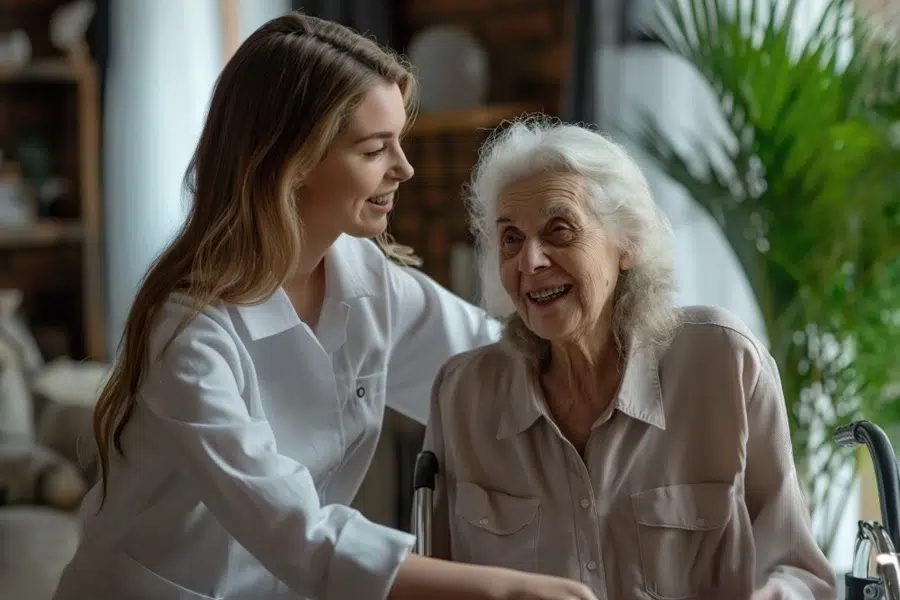

January marks Alzheimer’s Awareness Month, a time to reflect on the growing impact of dementia and the urgent need for better support. Families facing Alzheimer’s often describe the journey as overwhelming, with uncertainty at every stage. Compassion is essential, but it is only the beginning. With dementia cases rising sharply, we need systematic planning, equitable access, and stronger advocacy to ensure that people living with dementia receive the palliative support they deserve.
By 2030, nearly 1 million people in Canada are projected to be living with dementia, rising to 1.7 million by 20501,2. Globally, more than 55 million people currently live with dementia, and this number is expected to reach 78 million by 2030 and 139 million by 20503. Despite this scale, only a fraction of people with dementia receive palliative or end‑of‑life services.
The SPA‑LTC report reinforces that dementia is a life‑limiting condition requiring a palliative approach throughout the illness, not only at the end of life4.
These numbers tell a clear story: compassion alone isn’t enough — we need a palliative approach that blends medical expertise with family‑centered care.
System Gaps and Inequities
Despite the scale of need, dementia is often under‑represented in palliative care strategies. In Canada, seniors living with dementia have a mortality rate 4.3 times higher than other seniors (107.4 per 1,000 vs. 25.3), yet few receive palliative or end‑of‑life services4.
The consequences of these gaps are significant:
- Unplanned hospital admissions and emergency department visits increase when palliative care is absent.
- Families face greater emotional and financial stress without coordinated support.
- Care quality varies widely depending on geography, resources, and whether dementia is recognized as a palliative condition.
The SPA‑LTC report highlights that earlier identification of dementia as a palliative condition and more consistent assessment practices could reduce these inequities4.
These inequities highlight the urgent need for dementia to be fully integrated into palliative care planning, ensuring patients and families receive consistent, compassionate, and well‑organized support across the illness trajectory.
Practical Supports for Families and Care Partners
Families and carers are the backbone of dementia care. To strengthen their role, we need:
- Early conversations about goals of care, so families can plan and avoid crisis decision‑making.
- Training and support for frontline staff and carers through a palliative care training program. This will equip personal support workers and carers with tools to manage symptoms and communicate effectively.
- Standardized symptom assessment tools that support consistent care and help clinicians respond quickly to changes.
- Community‑based supports that reduce reliance on hospitals and keep care closer to home.
These practical measures not only ease the burden on families but also improve quality of life for patients. They embody a palliative approach that focuses on comfort, dignity, and holistic support throughout the dementia journey. Expanding access to a palliative care training program ensures that frontline staff and families alike are prepared to deliver this approach consistently.
Policy and Advocacy: Building a Better Future
To truly meet the needs of people living with dementia, policy must catch up with reality. Key priorities include:
- Integration of dementia into national palliative care strategies, ensuring it is treated with the same urgency as other terminal conditions.
- Funding models that recognize dementia’s long trajectory, supporting care over years rather than weeks.
- Advance care planning initiatives that encourage families to discuss preferences early.
- Equitable access across regions, so no family is left behind due to geography or resources.
- Stronger support for long‑term care staff, including palliative care training programs and organizational structures that enable consistent, person‑centred care.
Advocacy from healthcare professionals, carers, and community organizations will be vital to drive these changes.
Conclusion
Alzheimer’s Awareness Month reminds us that compassion is the foundation of dementia care, but it must be paired with action. A palliative approach, supported by structured palliative care training programs, can transform the patient and family experience. With organized care and open communication, dementia‑focused palliative services can provide a clear pathway to dignity, comfort, and family support.
The challenge is urgent — with planning, training, and policy change, dementia care can be beyond compassionate comprehensive care to support individuals and families in a timely way.
References
1. Alzheimer Society of Canada – Dementia Numbers in Canada. https://alzheimer.ca/en/about-dementia/what-dementia/dementia-numbers-canada
2. Canadian Centre for Economic Analysis – Dementia in Canada: Prevalence and Incidence 2020 to 2050. https://www.cancea.ca/wp-content/uploads/2022/11/Dementia-in-Canada-2022-03-03.pdf
Alzheimer’s Disease International – Dementia Statistics. https://www.alzint.org/about/dementia-facts-figures/dementia-statistics/
3. Canadian Institute for Health Information – Access to Palliative Care in Canada, 2023. https://www.cihi.ca/sites/default/files/document/access-to-palliative-care-in-canada-2023-report-en.pdf
4. Strengthening a Palliative Approach in Long‑Term Care (SPA‑LTC) – Dementia Care: Applying a Palliative Approach, 2022. https://spaltc.ca/wp-content/uploads/2021/01/SPA-LTC-Dementia-AB-EN-2022.pdf